
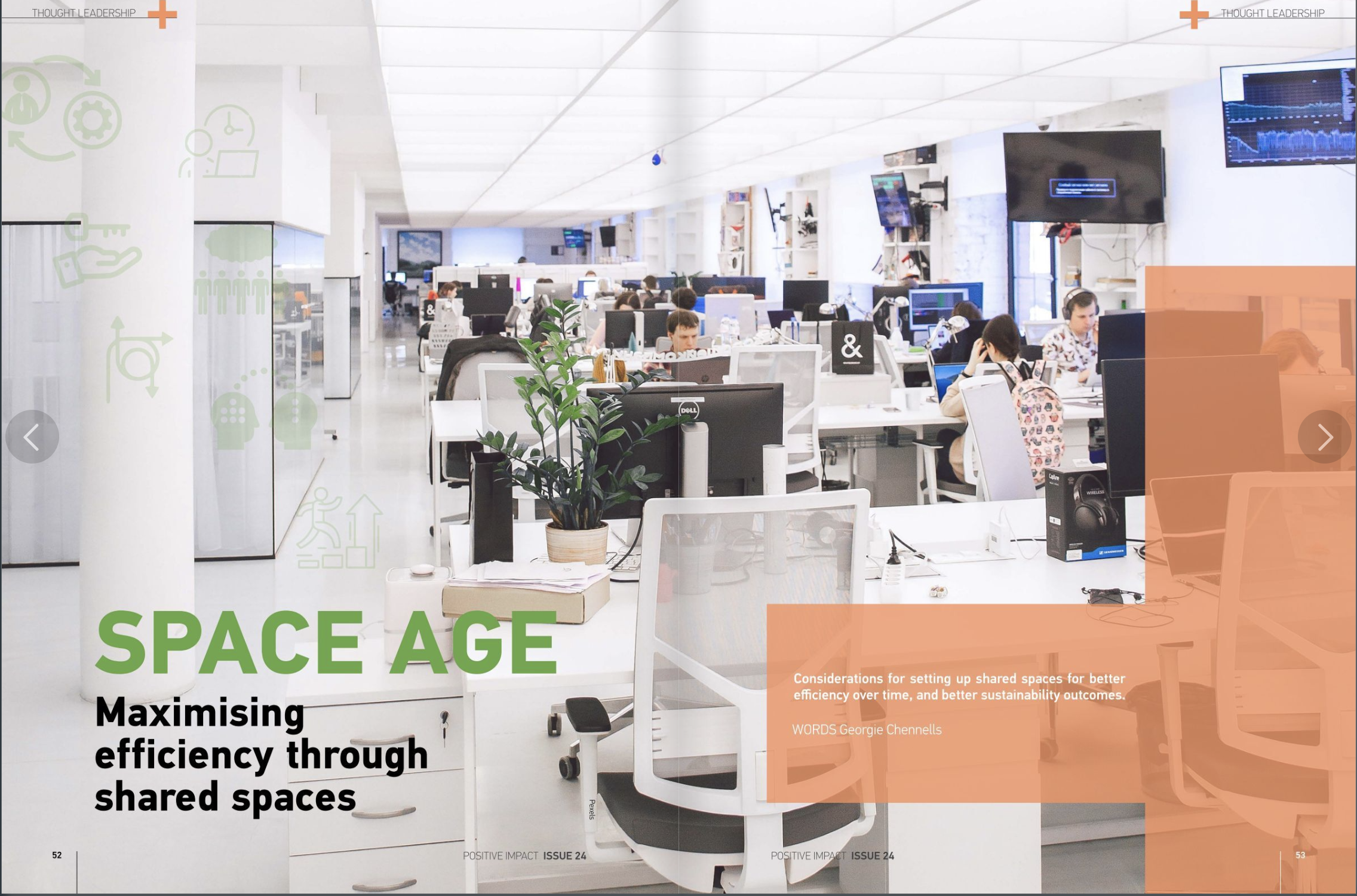
An article for Positive Impact Magazine by Georgie Chennells
One of the main reasons I’m hung up on workplace strategy is waste. Not considering how a space is designed, set up to operate, and how its occupants are empowered to use it can be really wasteful!
Offices that are half-occupied ghost towns are a waste of space, as well as a waste of the resources required to run them. Never mind the energy vacuum that the humans who visit them feel. Why make the effort to come in when it feels like a waste of energy?
Consider that 39% of the world's energy-related carbon emissions are the result of buildings. Building construction makes up some of this, while operational emissions (heating, cooling etc.) make up 28%.
By right-sizing office space, excess waste could be avoided, and the planet (and its humans) could be better off.
The following article is about this:
Use only as much building as you need.
Lean on your neighbours and enjoy the benefits of shared facilities where it makes sense. This can be a happy solution and build community.
Empower your people at all levels of the workplace system - whether they are part of designing, operating or using it - to create and enjoy a productive, efficient, healthy, connected place that is more than just an office.
Read the article on this, for + Impact magazine, at the link below: