
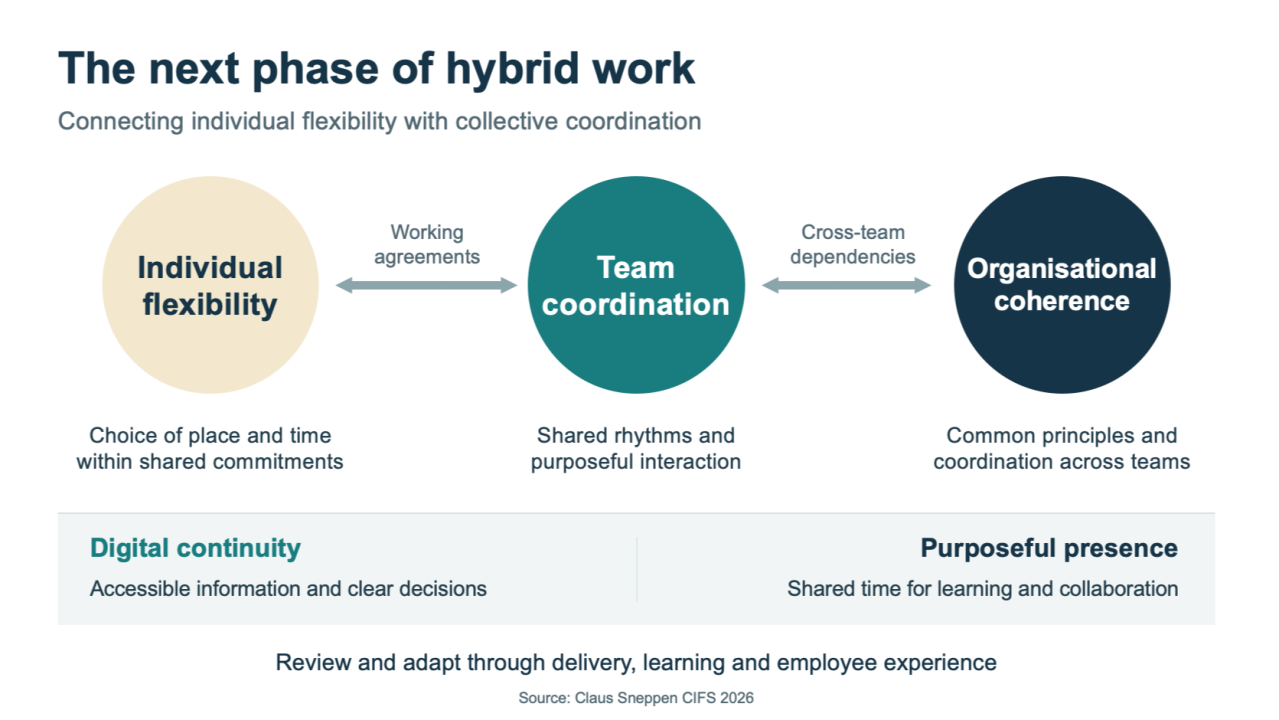
Image from original article by Claus Sneppen
Being in the same workspace can do a lot to solve problems faster, but it can also mask organisational inefficiencies like unclear roles and dependencies, and poor communication. The next phase of hybrid is about sorting those out, so that your time at the office can be used for more valuable interactions like discussion, exploration, resolution and relationship building.
This is an excellent article by Claus Sneppen on the next phase of hybrid work. If you’re involved in your organisation’s hybrid work setup, it’s worth a read.
My highlights:
1. The balance between individual and collective success: Making interdependencies visible can help with collective coordination.
2. Team agreements can help with getting the “individual vs collective” relationship right. They can start to map and make visible critical aspects of teamwork to avoid the delays. Setting expectations: What does good communication look like? And creating understanding around roles, dependencies, progress, priorities.
3. The time at the office is the opportunity for people to address the inefficiencies, but importantly also address those more open matters that can’t be dealt with as well remotely: discussion, exploration, relationships, resolutions.
4. The office still supports learning, relationship formation, integration across disciplines and forms of collaborative work.
5. Shared office time should be used with intention, and not over-booked or over-designed.
Read the full article for more detail, research outcomes and guidance on hybrid work design:
https://www.linkedin.com/pulse/next-phase-hybrid-work-from-individual-flexibility-claus-sneppen-r0tke/