
Ideas for South African workplaces
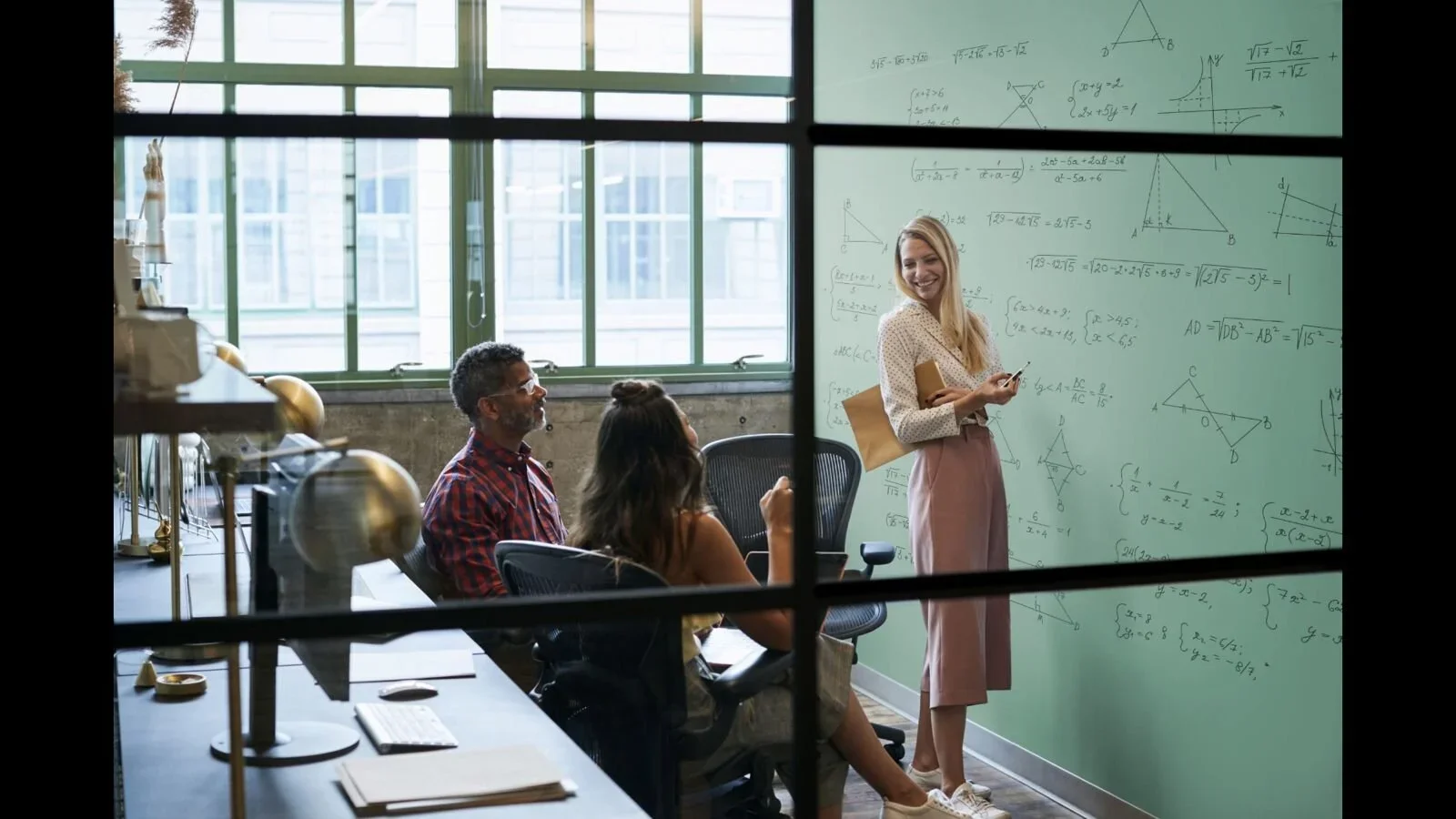
Full wall whiteboards can enhance the collaboration experience and are simple to install. Clear whiteboard paint can be sourced locally from Vicinity.
As more and more businesses seek to return their staff to their office spaces, it’s important to note that the way we work has changed, and our perceptions of work and being together in a space have changed. Our workspaces need to respond to and support the work activities that take place there, as well as support those who carry out the work activities: the people.
As many organisations are still trying to define and settle into a new way of working, it can be helpful to take an iterative approach to updating the workplace, as opposed to a complete overhaul. Making incremental changes to spaces, settings and amenities means that it is possible to test, review and adjust different elements to find the solution that best supports the productivity, efficiency and wellness of the organisation.
Here are four simple ways in which you can adjust your office space to support new needs, without having to undergo an entire interior overhaul.
1. More collaboration space. Fewer desks.
With more people working from home it makes sense that fewer desks would be required at the office. Conversely, the decreased time in the office, and the general refocusing of the office towards encouraging collaboration & connection between colleagues means that there is now a greater pressure on collaboration spaces to be more accessible, and perform.
Consider adding more places where people can effectively connect and have conversations. These could range from informal café areas, couches and touchdown tables, to more functionally equipped meeting spaces with whiteboards, plug and play technology, and great mobile AV equipment. Acoustics are also important and adding acoustic screening can support better connection between people as well as dampen the sound where appropriate.
2. In situ communications
We’ve become accustomed to getting most of our work-related information through the 2D screens of phones and laptops. Opening a message, reading content on a digital timeline, purposefully navigating a file path to find certain information, and interfacing through video conference or chat: this is how we receive information when mobile. Digital communication is amazing in its reach, but limited in its scope and depth.
It is possible to significantly enhance your organisational communications through on-site material, creating a more direct and engaging way of communicating and making sure that those key, but perhaps less urgent messages around your organizational purpose and activities are not lost in the digital realm.
Signage, posters and customized wallpapers are a simple layer of experiential communications that can be added to your space, that can create engaging environments as well as effectively get messages across. These are also easily refreshed on a regular basis.
Locally, companies like Vicinity and Print House can design and install customized wall coverings and flexible communication materials.
3. More flexibility through furniture & fittings
Without going through an entire refresh, it is possible to introduce some elements of flexibility into your space that allow it to be adjusted as you figure out what is optimal. Indeed, assuming that things will continue to change, it makes sense to set up for ongoing flexibility.
Simple devices like sliding walls, whiteboards on wheels and screens to enclose or open up meeting spaces can enable multiple functions to be possible in one space, and allow users to personalize according to their needs. Need a project space for a few months? Or perhaps just more whiteboards in this area for today’s brainstorm? Having movable components of your workplace can mean your space can be adjusted for your exact needs as you go.
Simple tools for flexibility can mean your organisation has the freedom to find the best solution for your new way of workng, that works for each and every team on an ongoing basis.
Local suppliers Print House and Angel Shack provide some fantastic screens and flexible furniture.
4. Measure what you can, and using data to drive smart, incremental changes
Are you measuring your office occupancy as you go? Occupancy is a broad measure of how many people are occupying your space at any one time. Using access data, wifi connection data and other information that you probably already have, you can measure how many people are actually coming in to the office. What are peak hours of occupancy that we need to cater for, or take advantage of? If you have planned employee rotation, then is it going as planned?
Measuring occupancy is a simple way to begin to understand your people-space dynamic, and a tool to support your planning and decision making, including the decisions around those small incremental adjustments in your space and how it's used.
Going to the next level, technology systems involving sensors and AI cameras can provide a valuable layer of information that shows how your desks, meeting spaces and other facilities are being utilized. Cataly5t,Senzo Live and Ergosense all provide systems locally.
Other simple analysis tools like employee surveys can also yield insights that help to paint a more accurate picture of how effectively the workplace is supporting the employee experience, and where to focus improvement.
*
As your organisation transitions to normalising a new way of working, the above points can be helpful in evolving your space to support work activities and people as part of a wider strategic workplace change.
Evolving your office space might not require a massive interior overhaul if it’s done intelligently.